
Valenti Toyota ELECTRIFIES your driving experience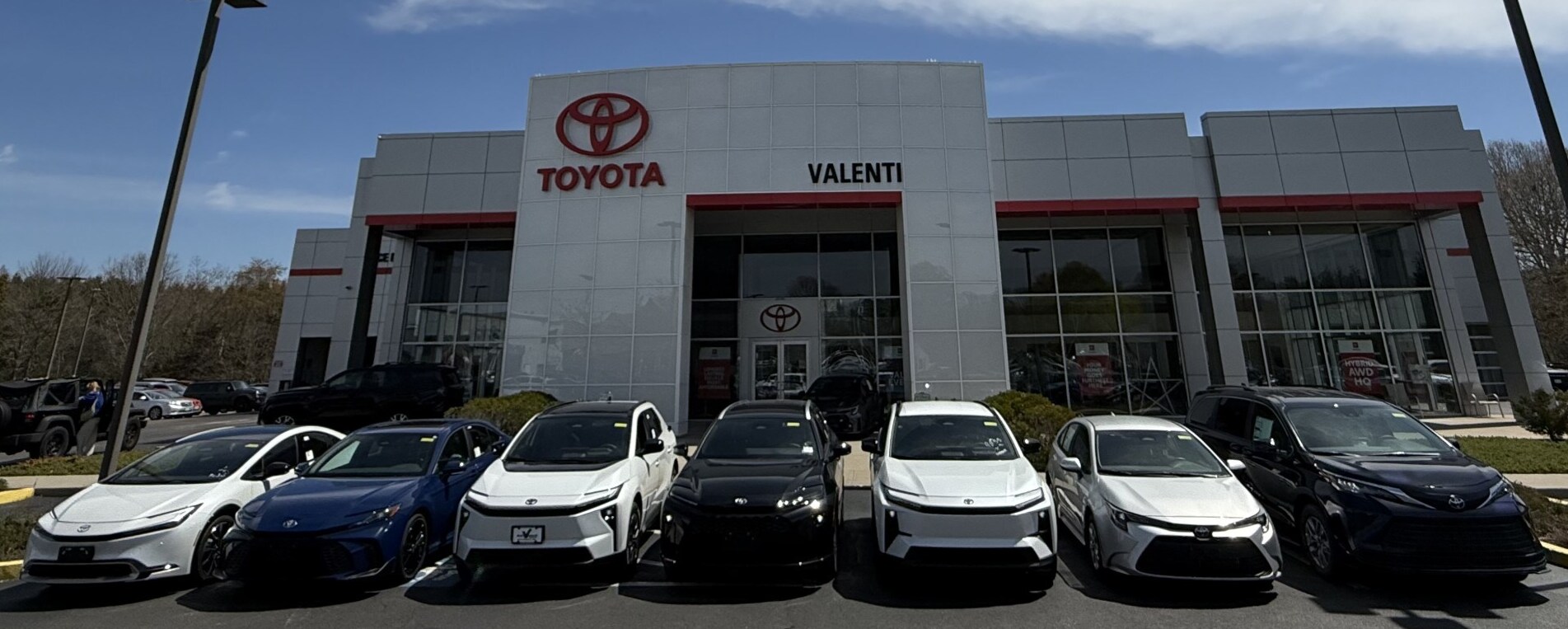
The line up of Toyota electrified cars, vans and small SUV's at Valenti Toyota Westerly RI
The Power of Choice
Take charge of your future and choose from Valenti Toyota's diverse range of powertrains.

The line up of Electrified Toyota Trucks and Large SUV's at Valenti Toyota Westerly RI.
Valenti Toyota's 2026 model year represents one of the most expansive electrified lineups in the auto industry. Rather than committing to a single technology, the Toyota continues to pursue a "multi-pathway" electrification strategy, offering hybrids, plug-in hybrids, battery electric vehicles (BEVs), and even hydrogen fuel-cell models in select markets.
Below is a clear breakdown of how many electrified vehicles Valenti Toyota offers in 2026, followed by an explanation of the different electrified systems.
Valenti Toyota's 2026 Electrified Vehicle Lineup
By 2026, Toyota offers around 20-21 electrified models globally, depending on market availability and new additions like the 2026 C-HR EV and bZ Woodland.
Hybrid Electric Vehicles (HEVs)
Toyota's largest category is traditional hybrids, with well over a dozen models available in 2026. These include:
- Corolla Hybrid
- Prius
- Camry (now hybrid-only for 2026)
- Corolla Cross Hybrid
- RAV4 Hybrid
- Sienna
- Highlander Hybrid
- Grand Highlander Hybrid
- Toyota Crown / Crown Signia
- Tacoma i-FORCE MAX
- Tundra i-FORCE MAX
- Sequoia
- Land Cruiser (hybridized powertrain)
- 4Runner i-FORCE MAX
👉 Estimated total: ~14-15 hybrid models
Plug-in Hybrid Electric Vehicles (PHEVs)
Toyota offers fewer plug-in hybrids, but they are key bridge technologies:
👉 Estimated total: 2-3 models
Battery Electric Vehicles (BEVs)
Toyota's fully electric lineup is expanding in 2026:
- Toyota bZ series (including updated models)
- bZ Woodland SUV
- C-HR Battery Electric Vehicle
👉 Estimated total: 3-4 BEVs
Fuel Cell Electric Vehicles (FCEVs)
- Toyota Mirai (available in limited regions such as California)
👉 Estimated total: 1 model
Total Electrified Vehicles (2026)
- Hybrids (HEV): ~14-15
- Plug-in hybrids (PHEV): ~2-3
- Battery EVs (BEV): ~3-4
- Fuel cell (FCEV): 1
👉 Overall total: ~20-21 electrified vehicles
This gives Valenti Toyota one of the broadest electrified portfolios in the world.
Key Electrified Vehicle Systems Explained
1. Hybrid Electric Vehicles (HEV)
How it works:
A hybrid combines a gasoline engine with one or more electric motors. The battery is self-charging, using regenerative braking.
Key points:
- No plug required
- Automatically switches between gas and electric power
- Excellent fuel efficiency with minimal lifestyle change
- Ideal for drivers not ready to charge regularly
👉 Toyota pioneered this system with the Prius and continues to refine it.
2. Plug-in Hybrid Electric Vehicles (PHEV)
How it works:
A larger battery allows the car to run on electric-only power for short distances, then switch to hybrid mode.
Key points:
- Can be plugged in to charge
- Electric-only range (typically 40-50 miles)
- No range anxiety-gas engine acts as backup
- Best for mixed city/highway driving
3. Battery Electric Vehicles (BEV)
How it works:
Powered entirely by electricity stored in a large battery pack.
Key points:
- Zero tailpipe emissions
- Requires charging infrastructure
- Typically offers 250-300+ miles of range in newer models
- Fast charging available (e.g., ~30 minutes to 80% in ideal conditions)
4. Fuel Cell Electric Vehicles (FCEV)
How it works:
Uses hydrogen gas to generate electricity onboard.
Key points:
- Emits only water vapor
- Refuels quickly (similar to gasoline)
- Limited by hydrogen infrastructure
- Positioned as a long-term alternative to battery EVs
Key Takeaways
- Toyota's 2026 lineup includes about 20+ electrified vehicles, more than most competitors.
- The company emphasizes consumer choice, rather than forcing a shift to only EVs.
- Hybrids remain dominant, making up the majority of offerings.
- Plug-in hybrids serve as a transition technology, blending EV driving with gasoline convenience.
Conclusion
Valenti Toyota's 2026 electrification strategy is defined by diversity rather than exclusivity. While many automakers are focusing solely on battery-electric vehicles, Toyota continues to invest heavily in hybrids and alternative technologies. This approach allows consumers to adopt electrification at different levels, depending on infrastructure, budget, and driving habits.
In short, Valenti Toyota isn't betting on one future-it's preparing for several.
Come see all of the exciting and electrifying vehicles that Valenti Toyota has to offer here on the shoreline in beautiful Westerly RI
Hybrid EV
Hybrid EV
Hybrid Electric Vehicles start, refuel and handle like the gas-only Toyotas you already know and love—just with better mpg ratings. Even though they run on a combination of gas and battery-powered electric motor(s), they don’t use a plug to charge their battery. Instead, they recycle the kinetic energy captured from the vehicle’s braking motion to recharge on their own.
View Inventory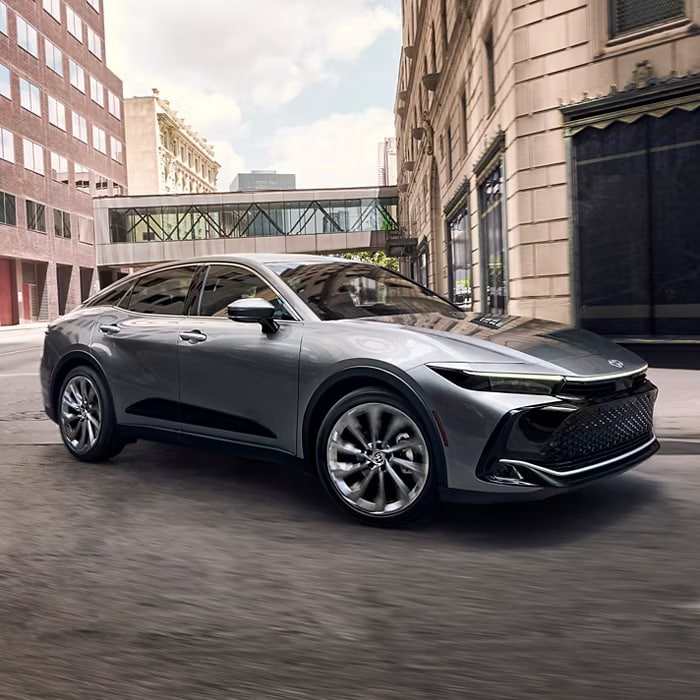
Plug-In Hybrid EV
Plug-In Hybrid EV
Plug-in Hybrid Electric Vehicles run just like hybrids, using a combination of fuel and battery-powered electric motor(s), but thanks to their larger battery pack, they can run farther on electric power alone. When your Plug-in Hybrid EV’s battery uses up its charge, it carries on like a regular Hybrid EV, using a combination of gas and energy stored from the vehicle’s battery system to power it. When you’re ready, plug it in to recharge it and return to the efficiency of operating on all-electric power.
View Inventory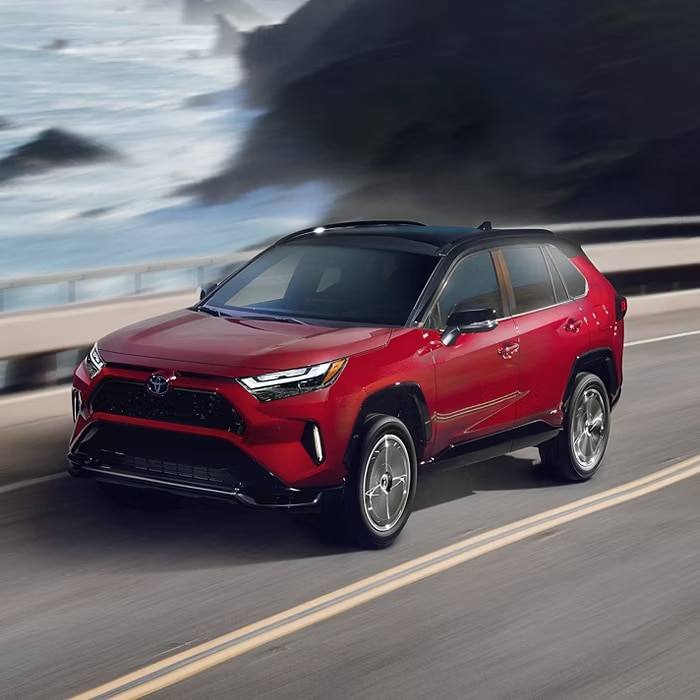
Battery EV
Battery EV
These all-electric vehicles replace conventional gas engines with battery-powered electric motors that provide smooth and almost instantaneous torque. Their main source of power is obtained when you plug them in and charge them up. Equipped with a North American Charging System (NACS) charging port, available separate CCS1 and J1772 adapters, and access to public chargers including the Tesla Supercharger network,* bZ continues to expand your charging options.
View Inventory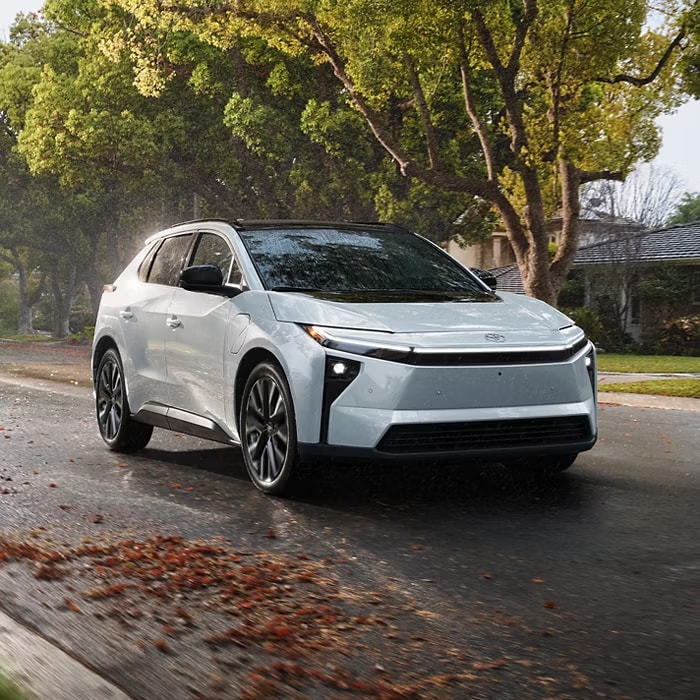
Our Electrified Lineup
Charge with confidence.
Usually can be the quickest way to charge up on the go.*
Currently only available in public charging stations.
Only available for bZ4X at this time.


The best setup for faster charging at home.

Can be installed at home by a licensed electrician. ChargePoint and Qmerit offer possible charger and installation options.

You’ll find Level 2 chargers at public charging stations nationwide.
A great pick for drivers with short commutes.
You can charge anywhere there is a common household 3-prong outlet.
Set up your at-home charging station.

Set up your at-home charging station.
With the dual-voltage charging cable that's included with all Toyota BEVs and PHEVs, you can take advantage of both Level 1 and Level 2 home-charging capabilities. Treehouse can make the Level 2 charging process simple from start to finish for your home set-up.
Find Charging
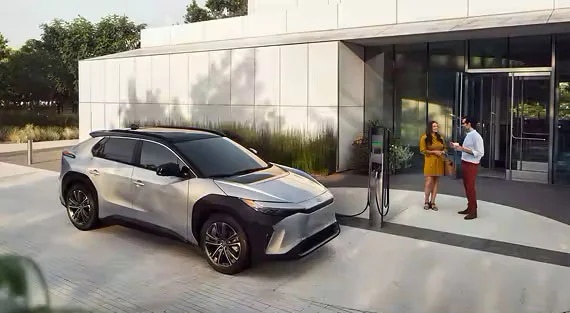
Finding a station has never been easier.
With currently over 30,000 public stations supporting Level 2 and DC Fast Charging, charging on the go is more convenient than ever. Just pull up, plug in, and charge up. And Toyota is working with ChargePoint and EVgo to help make tapping into their networks even easier.


Find Your Electrified Vehicle
Prototype vehicles shown with options using visual effects.
Toyota Crown Limited shown in Heavy Metal with available Advanced Technology Package.
RAV4 Plug-in Hybrid XSE shown in Supersonic Red with Midnight Black Metallic roof with Premium Package. Extra-cost color.
Limited availability.
Limited availability.
Mirai XLE shown in Heavy Metal. Prototype shown with options using visual effects.
bZ Limited AWD shown in Wind Chill Pearl. Prototype shown with options.
DC charging time will vary based on weather and other factors. DC charging times will increase as temperatures decrease, with significant increases possible at temperatures below freezing. Accessory use, battery level and condition, and charger specifications may negatively affect charging times. Use for comparison purposes only. Actual range will vary significantly depending on charging and driving conditions, including outside temperature, speed, accessory use, how/where you drive, battery condition and other factors. See www.fueleconomy.gov and Owner’s Manual for details.
Actual range attainable per minute/hour of charging will vary significantly depending on speed, outside temperature, accessory use, how/where you drive, battery condition, vehicle model and other factors.
Public charging experience will vary based on charger type (Level 2 or DC Fast Charger) and other factors including vehicle and environmental conditions. 2026 bZ AC Level 2 charging time estimates can be improved when using an input power source rated to the onboard charger’s max capacity. 2026 bZ DC fast charging time estimates can be improved in freezing temperatures when activating the battery preconditioning function. See toyota.com/electrified/charging for more information.
Electrical outlets for use with the dual-voltage charging cable must be installed by a licensed, qualified electrician. A 240V NEMA 14-50 outlet is required for Level 2 charging.
Prius Prime XSE Premium shown in Guardian Gray.
Accessing the ChargePoint network through the Toyota app requires an active subscription to Remote Connect that depends on 4G network availability and other factors. Also requires account registration through the Toyota app and acceptance of Connected Services Terms of Use at toyota.com/content/dam/toyota/privacyvts/pdf/connected-services-terms-use.pdf and Master Data Consent.
Registration required on the Toyota app. One-year unlimited complimentary charging begins the earlier of date of sale or registration and is subject to EVgo’s Terms of Use at https://www.evgo.com/terms-conditions/evttca/.Non-transferable to any other individual, entity or vehicle and cannot be used for any commercial purpose, such as ridesharing, carsharing, delivery services or company-owned vehicles. In the event of suspected fraud, abuse or violation of Terms of Use, EVgo may discontinue complimentary charging at its sole discretion. Data charges may apply. To learn more about Toyota's data collection, use, sharing and retention practices, please visit https://www.toyota.com/support/privacy-notice/.
For Toyota battery electric vehicles only. 2025 and earlier BEV models require adapter for use.
Platinum shown in Supersonic Red with Black bi-tone.* Prototype shown with options.
Prototype shown with options using visual effects. Tundra i-FORCE MAX is not for sale in the U.S. until March 2022.
bZ4X Limited shown in Heavy Metal with Black roof.* Prototype vehicle shown with options using visual effects. The bZ4X is not for sale in the U.S. until mid-2022.
Includes Traction Battery remaining above 70% of original capacity, Transaxle, Inverter with Converter